
"climate change coffee"
6000 article(s) found

Introduction to the taste of Colombian coffee bean flavor description grinding scale production area variety treatment method
Columbia coffee bean flavor description grinding scale production area variety treatment taste introduction Colombia's suitable climate provides a real sense of natural pasture for coffee. Coffee trees in Colombia are mainly cultivated in the Andes, on steep slopes about 1300 meters above sea level, where the annual temperature is about 18 degrees Celsius, annual rainfall is 2000 to 3000 millimeters, and north latitude 1.

Dominica Santo Domingo Coffee Flavor description Grinding characteristics introduction to the taste of varieties in producing areas
The earliest coffee in Dominica was introduced from Martinique (the overseas province of France), dating back to the early 18th century. Dominica is an island country with a tropical climate. The temperature changes little throughout the year. Except for the lower temperature in the Central Cordillera Mountains, which can reach less than 0 ℃ in winter, the annual average temperature in other areas is between 25 and 30 ℃, which is affected by the mountain topography.

Coffee trading knowledge Coffee Futures Price increase
Coffee futures trade coffee beans, and futures are both an investment and an increase in coffee. The increase in coffee lies not only in the origin, good or bad, but also for many piecemeal reasons. In the coffee futures market, the main factors affecting the price of coffee beans can be summarized as follows: 1. Changes in supply: supply and demand have a certain impact on prices, changes in supply

Introduction to the History of Coffee cultivation in Guatemala _ inventions in Guatemala that changed the Coffee Industry
Professional coffee knowledge exchange more information about coffee beans please follow the coffee workshop (Wechat official account cafe_style) Guatemala is located in Central America. This is a country with tropical rain forest weather, high humidity and warm climate all year round. It formed Central American volcanoes along with Nicaragua, El Salvador, Honduras, Costa Rica and Panama.

Introduction to Colombian Coffee Flavor description Grinding scale producing area Variety treatment method and Taste Manor
Columbia coffee flavor description grinding scale production area variety treatment taste manor introduces its unique geographical environment to create the high quality of coffee, Colombia, beautiful mountains and rivers, beautiful scenery, pleasant climate, spring all year round, fresh air, refreshing. Colombia's climate is mild, the air is * *, and the diversity of climate makes it a harvest season all year round, with different species at different times.

What are the natural weather conditions and environment for growing coffee
Character identification: 1. The seed coat of small fruit coffee has been removed, oval or oval in shape, 8-10mm in length, 5-7mm in diameter, 3-4mm in the middle part of coffee tree, raised on the back, flat on the ventral surface, with slightly curved longitudinal groove and paper seed coat marks. Raw products are yellow or dark green; baked products are dark brown with special aroma and slightly bitter taste. Astringent. 2. The seeds of medium fruit coffee are slightly larger and ovoid.
Costa Rica urgently needs to stimulate the coffee industry
Due to the decline in coffee prices on the international market, Costa Rican coffee exports totaled US $306 million in 2015, down 26% from US $412 million in 2012, Costa Rica reported on May 12. In the first quarter of 2016, the average world price of coffee was $1.14 per liter, down 26 per cent from the same period in 2014. Affected by climate change and diseases and insect pests at the same time, the coffee growing area of Colombia

Taste of Dominican boutique coffee beans A brief introduction to the characteristics of market development in manor producing areas
The temperate climate in Dominica is conducive to coffee cultivation, and the best places to grow coffee are the Barahona region in the southwest and the Cibao Valley north of Santiago, Dominica's second largest city. The northern region, represented by Hibao, and the southern region, including Okayabani Santo Domingo, produce good coffee. Among them, Santo

A brief introduction to the Flavor and Taste of Fine Coffee in the chaotic Climate of Manor Ireta in Panama
Panama is by far the narrowest country that shares the Atlantic and Pacific coastlines. And this has a far-reaching impact on coffee production. Central America is a long isthmus from northern Mexico to southern Colombia, connecting North and South America. Panama is located in the southernmost part of Central America, so the country runs from east to west, not from north to south as people think. this
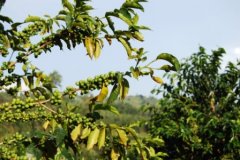
Costa Rica stimulates the main force of the coffee market
Due to the decline in coffee prices on the international market, Costa Rican coffee exports totaled US $306 million in 2015, down 26% from US $412 million in 2012, Costa Rica reported on May 12. In the first quarter of 2016, the average world price of coffee was $1.14 per liter, down 26 per cent from the same period in 2014. Affected by climate change and diseases and insect pests at the same time, the coffee growing area of Colombia

Where did the earliest coffee in Dominica come from?
The earliest coffee in Dominica was introduced from Martinique (the overseas province of France), dating back to the early 18th century. Dominica is an island country with a tropical climate. The temperature changes little throughout the year. Except for the lower temperature in the Central Cordillera Mountains, which can reach less than 0 ℃ in winter, the annual average temperature in other areas is between 25 and 30 ℃, which is affected by the mountain topography.

Colombia Coffee Flavor Description Taste Region Treatment Variety Grinding Scale
Colombia Coffee Flavor Description Taste Regional Treatment Variety Grind Scale Colombia's favorable climate provides a true natural pasture for coffee. Coffee trees in Colombia are grown mainly in the Andes, on steep slopes up to 1,300 meters above sea level, where year-round temperatures are about 18 degrees Celsius, annual rainfall is 2000 to 3000 mm, and latitudes 1 - 11 15
Boutique Coffee Costa Rica urgently needs to stimulate the coffee industry
Due to the decline in coffee prices on the international market, Costa Rican coffee exports totaled US $306 million in 2015, down 26% from US $412 million in 2012, Costa Rica reported on May 12. In the first quarter of 2016, the average world price of coffee was $1.14 per liter, down 26 per cent from the same period in 2014. Affected by climate change and diseases and insect pests at the same time, the coffee growing area of Colombia

Boutique Coffee knowledge Coffee Gene Secret
Researchers from France, China and other countries published the first draft of the genome of coffee in the US journal Science on the 4th. This result reveals the evolutionary history of caffeine in coffee and helps to cultivate new coffee varieties with better flavor and resistance to climate change and pests. Researchers at institutions such as the French Development Institute report that they are interested in the two most important businesses

Taste rich Dominica's Santo Domingo Coffee introduces boutique coffee beans
The earliest coffee in Dominica was introduced from Martinique (the overseas province of France), dating back to the early 18th century. Dominica is an island country with a tropical climate. The temperature changes little throughout the year. Except for the lower temperature in the Central Cordillera Mountains, which can reach less than 0 ℃ in winter, the annual average temperature in other areas is between 25 and 30 ℃, which is affected by the mountain topography.
The Secret of Coffee genes in Coffee Encyclopedia
Researchers from France, China and other countries published the first draft of the genome of coffee in the US journal Science on the 4th. This result reveals the evolutionary history of caffeine in coffee and helps to cultivate new coffee varieties with better flavor and resistance to climate change and pests. Researchers at institutions such as the French Development Institute report that they are interested in the two most important businesses

Introduction to the description Price of the Flavor of Dominica Coffee varieties
The earliest coffee in Dominica was introduced from Martinique (the overseas province of France), dating back to the early 18th century. Dominica is an island country with a tropical climate. The temperature changes little throughout the year. Except for the lower temperature in the Central Cordillera Mountains, which can reach less than 0 ℃ in winter, the annual average temperature in other areas is between 25 and 30 ℃, which is affected by the mountain topography.

Changes in the Colombia Fine Coffee Industry Exploring the Origins of Colombia Coffee
Have you ever heard of a coffee name as well-known as Juan Valdez? Juan valdez, however, isn't even real. He was a fictional character invented in the 1950s by the marketing team of Fedecaf, the national coffee association in Colombia. At one time, however, coffee was an exotic crop that colonized the land of Colombia. Centuries of adaptation, innovation and alignment

Introduction to the flavor of Dominica coffee beans with rich taste and smooth taste
Miniga's earliest coffee was introduced from Martinique (the overseas province of France), dating back to the early 18th century. Dominica is an island country with a tropical climate. The temperature changes little throughout the year. Except for the lower temperature in the Central Cordillera Mountains, which can reach less than 0 ℃ in winter, the annual average temperature in other areas is between 25 and 30 ℃, which is affected by the mountain topography.

Chemical changes in the reaction of coffee roasting which reactions are chemical changes in coffee bean roasting
Professional coffee knowledge exchange more coffee bean information please follow the coffee workshop (Wechat official account cafe_style) professional coffee roasting | coffee roasting is too complicated? A picture teaches you that there are two stages of change in the roasting process of raw beans after baking. 1 physical = volume, density, volume 2 chemical = smell, taste, taste intense coffee beans are roasted at high temperature.